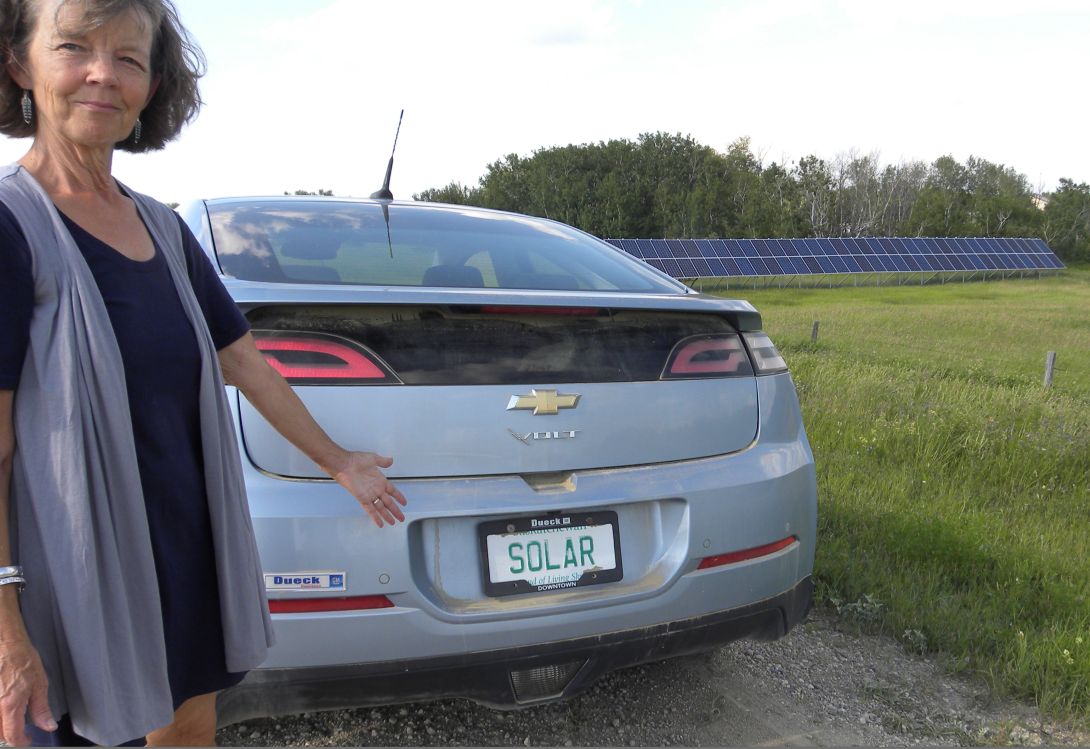
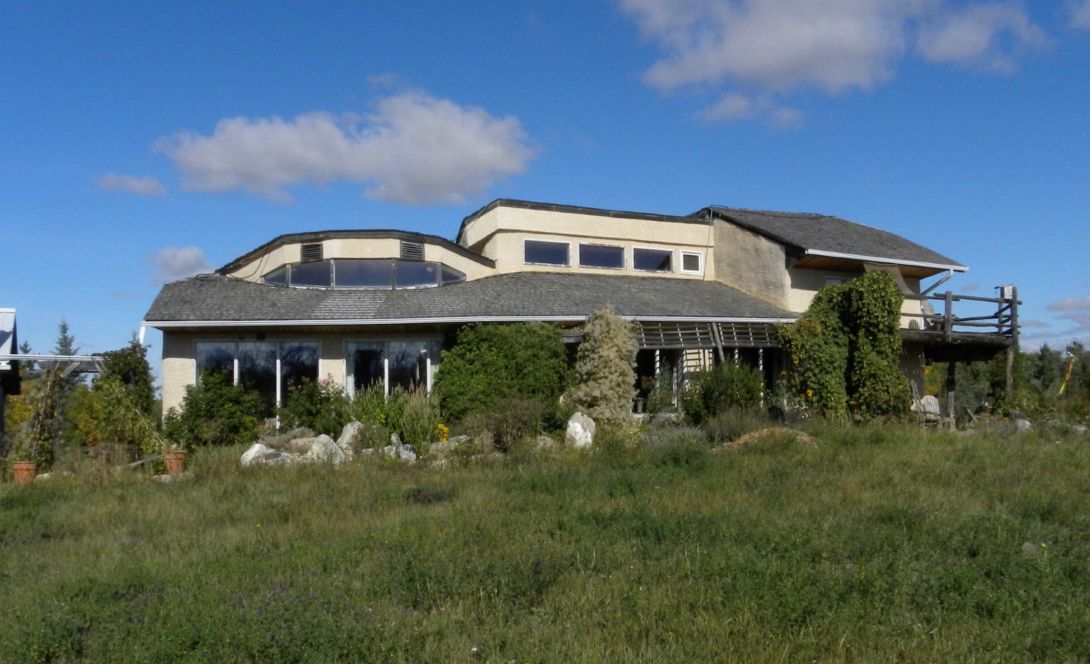
We have been living for the past three decades in ways that we hoped would lower our impact on the environment — the size of our “ecological footprint”. In 1995-96 we built a passive solar, post and beam, straw-bale house. Our energy sources, besides the passive solar design, were the electric grid, four large hot-water solar panels (two tied to the house and two to the garage) and a wood stove. In 2014 we added a 72 panel, 17.6 KW, net-metered photovoltaic array. Our array was slightly larger than needed and as SaskPower paid us nothing for energy above what we used, we soon added a one-year old used PHEV (2013 Chevrolet Volt) which more than used up our surplus production.
We have been generally very pleased with the day-to-day operation of both the house and car as well as the financial return on our energy investments. The photovoltaic array was by far the most capital intensive ($57,200 after a 35% rebate; 20% from the province and 15% from the installer). Since the beginning of its operation January 12, 2014 to April 18, 2025 it has generated 262,137 KWh of electricity and saved 446,082 lbs of CO2. We average over 25,500 KWh per year worth $3,410 at today’s prices, just under a 6% return on our investment. So far it has saved us $31,400 during a time when our cost per KWh has increased 25% from 0.10630 to 0.13332/KWh. At todays pricing it will still take us another seven years for a complete ‘payback’ but we expect the panels will continue to be operational for several more decades providing free energy.
The investment in a PHEV has also been a good choice. The Volt had 12,000 km when we purchased it and we have put on another 168,000. Since we charge it mainly at home (on a normal outlet), fuel costs have been minimal. Its modest battery range is generally enough for a round-trip to town (less than 65km). Total maintenance other than tire replacement has been under $100/year and we estimate total fuel savings at around $18,000. If we keep the car another eight years it will have saved us more money than the entire purchase price. In contrast to many concerns that Saskatchewan is too cold for electric vehicles, we feel the Volt has been the best winter car we have ever owned. At present there has been little noticeable degradation in the battery pack.
We have also made a number of other life-style decisions to lower our footprint such as forgoing air travel, a TV, air conditioner, clothes dryer, or microwave, and installing a composting toilet and energy efficient appliances. We grow much of our own food and again take full advantage of the sun raising all warm season vegetables in a low-input hoop-style greenhouse. Calculating our ecological footprint we find the following: Our total footprint is 3.4 global hectares (GHA) and our carbon footprint is 4.8 tonnes/year representing 50% of our total footprint. This is less than half the average for North America which is over 8 GHA.
In spite of all these efforts, our impact on the environment is still substantially higher than the world average. Our ‘Overshoot Day’, the day when our demand for resources and services exceeds the regenerative ability of the planet to replace them, is July 1. We are still above the average world footprint (2.75 GHA) while the sustainable biocapacity/person is only 1.63 GHA. This difference is accounted for by the unsustainable and temporary consumption of ecological capital (overshoot). It implies that if everyone in the world lived in a manner similar to us, it would be sustainable only if we reduced the world population by half. This is the uncomfortable conundrum we now face.