
An 8.8 kW Ground-Mounted Solar System: Our Journey to Cleaner, More Independent Power
In 2024, we made the decision to install a solar power system on our property, taking a meaningful step toward cleaner energy and greater independence from the electrical grid. Like many homeowners, our motivation wasn’t driven by a single factor, but by a combination of environmental concerns, long-term cost considerations, and a desire to reduce reliance on Saskatchewan’s coal-heavy electricity generation.
After a long planning and installation process, our 8.8 kW ground-mounted solar system finally came online in October 2025.
Why We Chose Solar
Reducing our household’s carbon footprint was an important driver from the start. Saskatchewan still relies heavily on coal-fired power, and producing our own electricity felt like a tangible way to reduce that dependence. At the same time, energy independence and rising electricity costs made solar increasingly attractive as a long-term investment.
While increasing home value wasn’t the primary motivation, it was certainly an added benefit. Solar felt like future-proofing our property while aligning our energy use with our values.
System Design and Installation
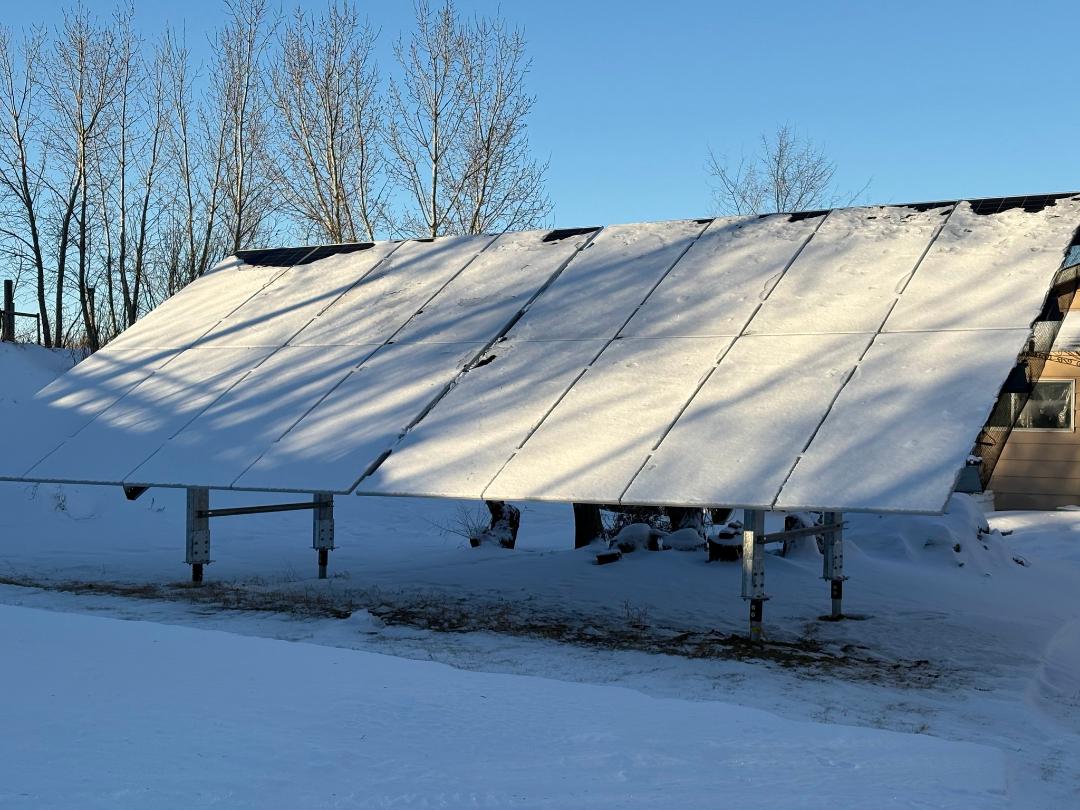
Our system is an 8.8 kW ground-mounted array, installed by a contractor. Because our property is located close to a golf course and wayward golf balls are numerous, roof-mounted solar wasn’t an option. Instead, we selected a location on our land that offered the best sun exposure and cleared a small number of trees to make room for the array.
Seeing the system installed for the first time was a surprise — the sheer size of the array really puts things into perspective. What looks modest on paper feels much more substantial when you’re standing next to it. Over time, though, it has become a familiar and welcome sight, especially since we can see it clearly from our home office window.
The Installation Timeline
One challenge we didn’t fully anticipate was how long the overall process would take. Delays meant that the system missed most of the summer solar season and didn’t become operational until October. As a result, we don’t yet have annual production numbers, and winter isn’t the best indicator of full system performance.
That said, even during shorter winter days, the system has been producing power consistently.
Living With Solar in Winter
One of the more interesting discoveries has been winter performance. Even when completely covered in snow, the panels still generate electricity. Because our system is ground-mounted, we’ve been able to clear snow manually, allowing the panels to return to optimal production much faster than a roof-mounted system would.
Those first few clear, sunny days after installation were especially satisfying — watching real-time production climb and using that energy to charge our electric vehicle felt like filling up with premium fuel produced right in our own backyard.
Net Metering and Costs
Our system is connected through net metering, allowing excess power to flow back into the grid. While SaskPower currently offers no direct financial incentives for solar installations, we were able to take advantage of the Canada Greener Homes Loan, which provided 10 years of 0% interest financing.
The total system cost came in just under $35,000. Because the system went live late in the year, it’s still too early to calculate annual savings, but we’re expecting a significant improvement once spring and summer production begins.
Looking Ahead
Solar is just one piece of our broader energy plan. We already have an EV charger installed and plan to move toward a V2H (vehicle-to-home) bi-directional charging setup, which will allow our electric vehicle to further reduce our dependence on grid power.
In the future, we’re also considering additional electrification upgrades such as a heat pump or geothermal system, continuing the shift away from fossil fuels wherever possible.
Final Thoughts
While the installation process took patience, the end result has been worth it. Solar has changed the way we think about energy — not just as something we consume, but something we actively produce. Watching the system work day after day has made the transition feel real, practical, and rewarding.
We’re looking forward to seeing how the system performs over a full year and continuing to build toward a cleaner, more self-sufficient energy future.