In 2014, we decided it was time to install solar panels at our home. We had already done a lot of work to reduce energy use in our home – both heating and electrical energy. Next, we wanted to reduce our reliance on fossil fuels.
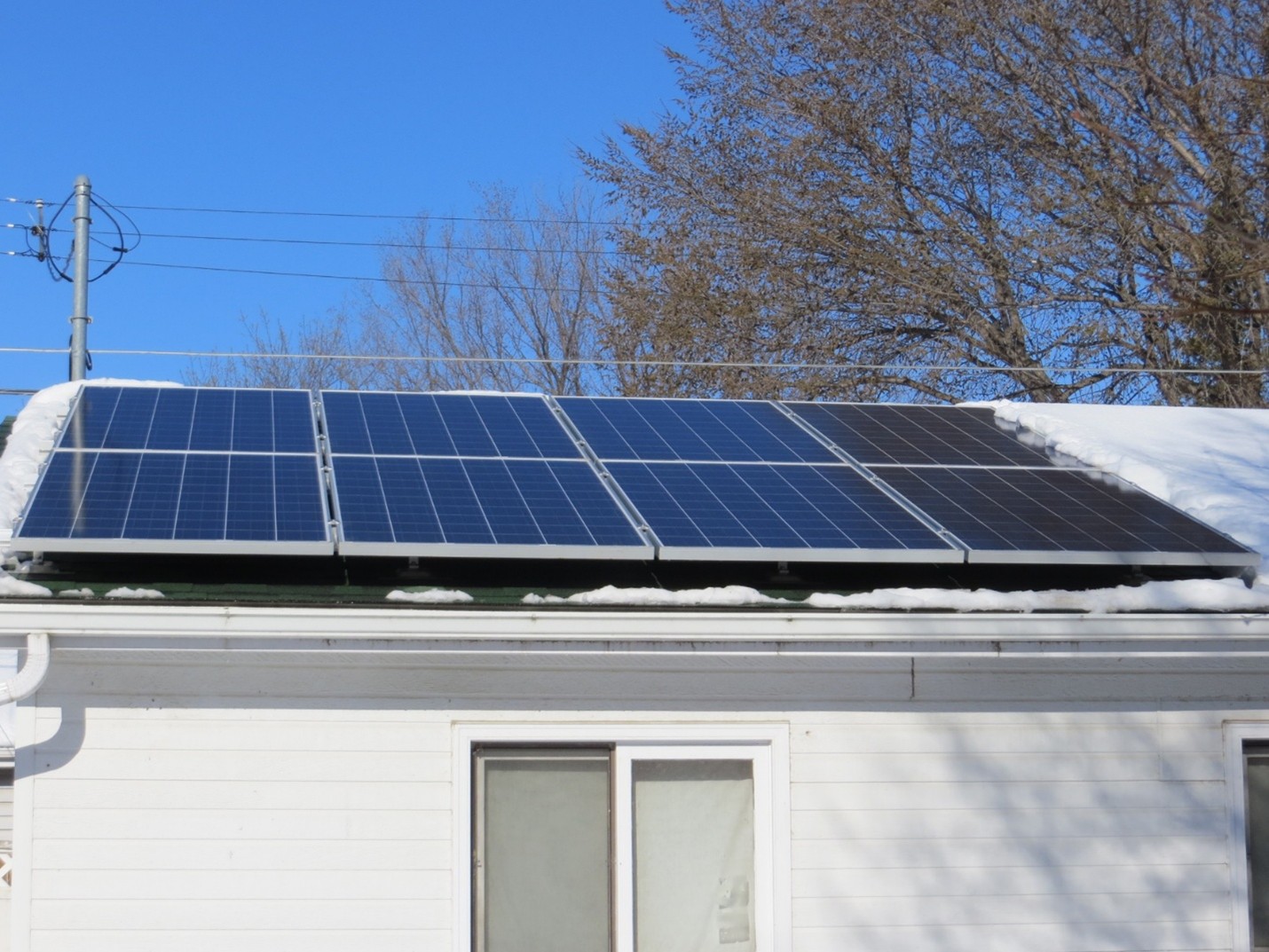
Our system was designed to produce about the same amount of electricity as we use. We installed a 4.16 kW system on our garage roof. The garage was selected because our electrical service enters our property at the garage. We don’t have any south facing roof, so we have an east and west facing, 4:12 slope installation (i.e., far from textbook). July 31, 2014 our system started producing.
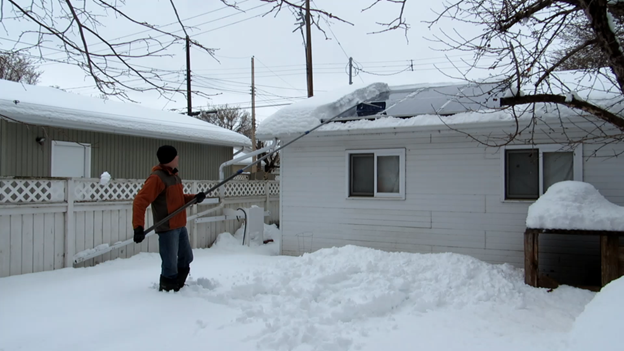
If it snows overnight, Jim usually scrapes the snow off before leaving for work. If it is promising to be sunny, he can’t bear to wait until the end of the day and possibly miss out on some production. He uses a roof rake, so there is no climbing required. Once the panels are mostly clear, any remaining snow or frost disappears once the sun hits them.
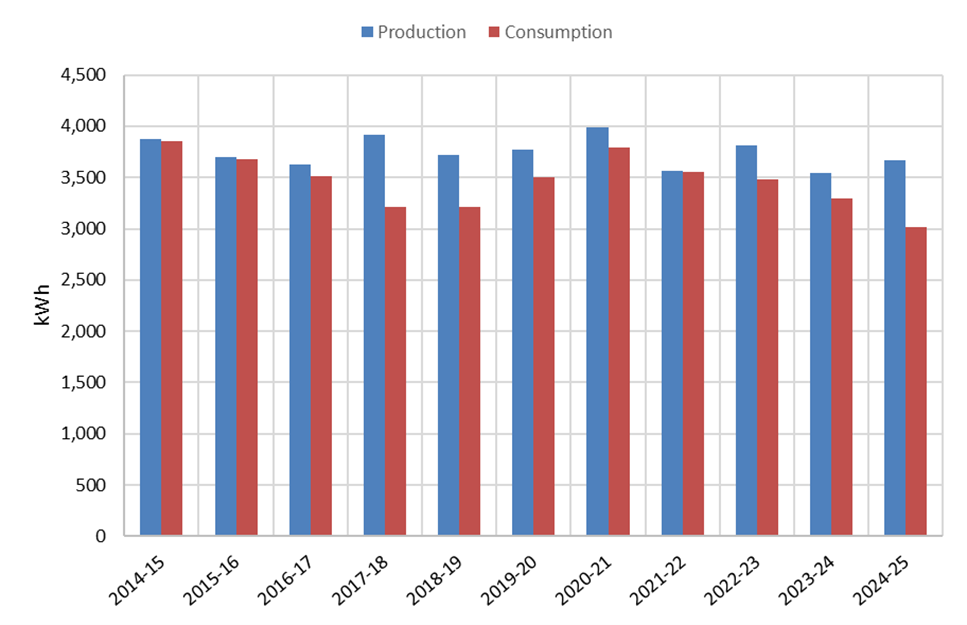
So far, we have produced slightly more electricity than we use each year. When our daughter moved out, our consumption dropped (one less computer, fewer TV hours, less cooking and laundry…). During the pandemic our consumption increased (both of us working from home, all cooking done at home, more TV hours…).
We’ve had the panels for 11 years, and other than cleaning off the snow, and usually one dust removal session in the spring, we have done zero maintenance on the system. We have noticed some changes in production: our annual production has stayed reasonably consistent (with year-to-year variations in cloud, smoke, tree cover…). However, the peak power the system produces is declining steadily.
We paid a total of $14,000 for our system The only metric we ever needed was, “it’s worth $14,000 to us to produce electricity from a renewable source”. However, others seem to like financial indicators. The other metric we use is that, based on the expected lifetime production from the panels, we’ve locked our electricity price in at 11 ¢/kWh. (Current residential rate is 16.38 ¢/kWh).
Over the 11 years since we installed the system, our production has averaged 3743 kWh and our consumption has averaged 3466 kWh. In terms of carbon reduction, at SaskPower’s 2024 grid intensity of 0.523 kgCO2e/kWh, we offset 2,000 kgCO2e/year.
When we get an electric or PHEV car or install a heat pump in our home, we will consume more electricity than we produce. We have a lot of roof space remaining (half the garage, plus all the house) or we could sign up for Saskatoon Light & Power’s Renewable Subscription Service (saskatoon.ca/RSS), which allows customers to purchase renewable energy from Saskatoon Light& Power.